Report Cards Are Coming Soon Dont Be Scared of Grades
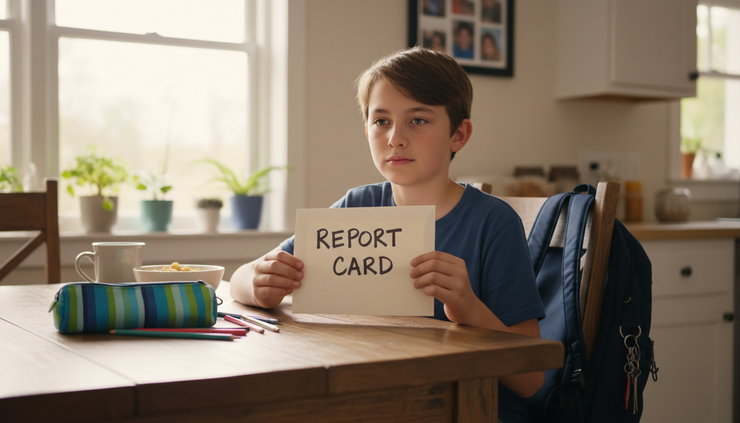
The moment report cards come out can make a quiet room feel loud. A single letter, number, or comment can start a storm of thoughts: What if I failed? What if my family is disappointed? What if this means I’m not good at school?
Take a breath.
Grades matter, but they do not get the final say about who anyone is or what anyone can become. A report card is a snapshot. It shows what happened during one stretch of time, in certain classes, under certain conditions. It is not a full picture of effort, kindness, creativity, growth, curiosity, or character.
When report cards are coming soon, fear is common. So is impatience. So is hope. The goal is not to pretend grades do not matter. The goal is to look at them without panic, learn from them, and make a plan that actually helps.
Grades are information, not a final judgment
A report card gives information. That is all.
It may show that math skills are strong, reading needs more practice, homework is missing, tests are stressful, or participation has improved. It can point to patterns that are easy to miss during the busy school day.
A low grade does not mean someone is lazy. It does not mean someone is not smart. It does not mean the future is ruined. It means something needs attention.
Sometimes the issue is academic. A student may not understand fractions, essay structure, grammar, chemistry formulas, or historical timelines yet. That word matters: yet.
Sometimes the issue is not the subject itself. It may be:
Missing assignments
Trouble studying for tests
Forgetting directions
Feeling anxious during class
Rushing through work
Not asking for help
Being absent or late
Having too many activities and not enough rest
Two students can have the same grade for very different reasons. One may understand the lessons but forget to turn in work. Another may turn in everything but struggle with quizzes. Another may have a hard time reading directions, even when they know the material.
That is why the grade is a starting point, not the whole story.
A report card can say, “Look here.” It should not say, “Give up.”
Feelings are normal when grades arrive
Grades can bring up big feelings because they feel personal. A student may see a C, D, or F and think, “I am a failure.” A parent or caregiver may see the same grade and think, “Something is wrong.” Both reactions make sense, but both can lead to panic if the grade becomes a label.
The first step is to separate the person from the performance.
Try changing the words:
“I’m bad at math.”
“I failed.”
“My teacher hates me.”
“I’ll never catch up.”
“I need more practice with this part of math.”
“This grade shows I need a new plan.”
“I need to ask what I can do differently.”
“I can start with one missing skill or assignment.”
This is not pretending everything is fine. It is choosing words that leave room for improvement.
Grades can also trigger fear because students imagine the conversation that will happen at home. Families may worry about college, sports eligibility, future classes, or whether a child is falling behind. Those worries are real, but anger and shame rarely help anyone learn.
A calmer response works better:
Open the report card together.
Notice strengths first.
Ask what feels fair and what feels surprising.
Pick one or two areas to work on.
Make a simple, realistic plan.
The goal is not to avoid responsibility. The goal is to make responsibility feel possible.

Look for the story behind each grade
Every grade has a story. Finding that story is more useful than staring at the letter.
Start with questions that reveal patterns.
For classwork
Was the work usually finished? Was it turned in on time? Did directions make sense? Were careless mistakes common?
For tests and quizzes
Was studying happening early enough? Did nerves get in the way? Were test questions different from homework questions? Did the student know what to study?
For homework
Was there a regular time and place to work? Were supplies easy to find? Did distractions make assignments take too long?
For participation
Did the student ask questions? Did they join discussions? Did they avoid speaking because they were unsure or embarrassed?
For teacher comments
Do comments mention effort, behavior, missing work, improvement, focus, or specific skills? Teacher comments often show the clearest path forward.
A grade of 78 in science may sound disappointing at first. But if the student started the term with low quiz scores and ended by improving lab work and turning in assignments on time, that grade includes progress. A grade of 92 may look great, but if comments say, “Needs to slow down and check work,” there is still something helpful to learn.
Good grades deserve more than a quick smile. Lower grades deserve more than a lecture. Both deserve attention.
Do not compare report cards like scoreboards
Comparison can turn report card season into a competition. Siblings compare. Friends compare. Parents compare without meaning to. Students may hear, “Your cousin got all A’s,” or “Your sister never struggled with this.”
That kind of comparison usually adds pressure without adding a plan.
Students have different teachers, strengths, challenges, learning styles, home routines, health needs, and stress levels. A grade tells part of one student’s school experience. It does not rank a person’s worth against someone else’s.
A better comparison is personal growth.
Ask:
Did this grade improve from last time?
Did work habits get better?
Was attendance stronger?
Did missing assignments go down?
Did confidence grow?
Did the student try a new study method?
Did they ask for help sooner?
Progress may show up before the grade changes. That can be frustrating, but it is still real. A student who moves from failing tests to passing them may still have an overall low grade because earlier scores are part of the average. That does not mean the effort failed. It means the plan has started working.
Report cards are coming soon Dont Be Scared of Grades can be more than a title. It can be a reminder that fear makes grades harder to face, while honest attention makes them easier to use.

What to do before the report card arrives
Waiting can be the hardest part. The good news is that there are practical steps to take before grades come home.
Check current grades if they are available
Many schools use online gradebooks. If that is available, check it calmly. Look for missing assignments, low quiz scores, or categories that carry more weight.
Do not refresh the page all day. That creates more stress. Pick one time to check, then write down what needs action.
Turn in what can still be turned in
Some teachers accept late work. Some do not. Some offer partial credit. Some allow corrections. It never hurts to ask respectfully.
A simple message can help:
I noticed I have missing work in your class. Is there anything I can still turn in or correct before grades close?
That message shows responsibility. It does not demand special treatment. It asks for a clear next step.
Talk to teachers early
Teachers usually want students to succeed. They can explain what matters most before the grading period ends.
Good questions include:
What assignment should I focus on first?
What skill should I practice most?
Is there a chance to correct or redo anything?
What can I do differently next grading period?
Am I missing anything that I may not realize is missing?
Students who ask early often feel less helpless. Even if the grade does not change much, they understand what happened.
Clean up the backpack and folders
This sounds small, but it can make a big difference. Lost papers create missing grades. Messy folders hide study guides. Random worksheets make school feel more confusing than it has to be.
Set a timer for 15 minutes. Sort papers into three piles:
Turn in
Keep for studying
Recycle or throw away
Small order can lower stress fast.
Get enough sleep
Cramming, worrying, and staying up late rarely help. Sleep affects focus, memory, mood, and patience. A tired brain has a harder time solving problems and handling feedback.
Rest is not a reward after perfect grades. Rest is part of learning.
What to do when the report card comes home
Open it when there is enough time to talk. Avoid opening it in the car right before practice, during a rushed breakfast, or five minutes before bedtime. Stress grows when the moment feels trapped.
Start with the full picture.
Notice:
Strong grades
Improved grades
Teacher comments
Attendance
Work habits
Patterns across subjects
One area that needs support first
If a grade is upsetting, pause before reacting. A quiet minute can prevent a harsh sentence that sticks for a long time.
Then choose the next step.
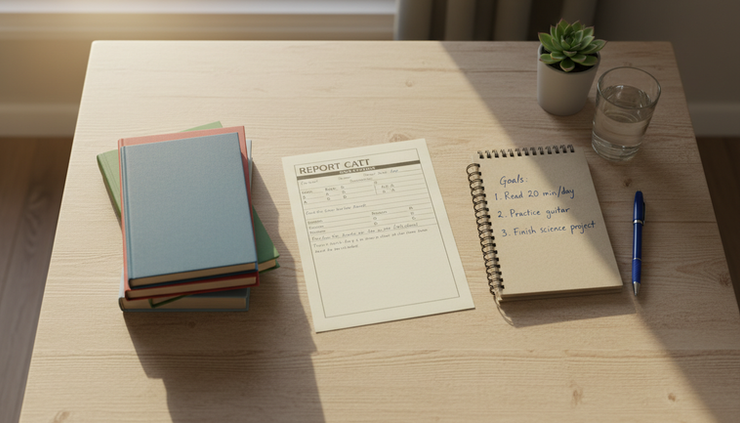
A helpful plan should be specific and small enough to follow. “Do better in school” is too vague. “Study math for 20 minutes on Mondays and Wednesdays, then ask one question in class each Friday” is clearer.
Try a plan like this:
Pick one subject to focus on first.
Name the main problem.
Choose one habit to change.
Set a weekly check-in time.
Ask for help if the plan is not working.
For example:
Subject English
Main problem Missing reading responses
New habit Write responses right after reading, before doing other homework
Check-in Thursday after dinner
Help Ask the teacher for an example of a strong response
This kind of plan builds trust because it is visible. Everyone can see whether it is happening.
Good grades need attention too
A strong report card is worth celebrating. Students who worked hard should hear that their effort was noticed. A simple, sincere comment means a lot: “You stayed with it, and it shows.”
Even with good grades, the report card can still teach something. Which habits worked? Was there a class that felt easier because notes were organized? Did reading ahead help? Did asking questions make tests less stressful?
Success leaves clues. Keep the habits that helped.
Celebrate in a way that fits the family. It does not need to be expensive. A favorite meal, extra free time, a movie night, or a proud note on the fridge can make effort feel seen.
Families can help without adding fear
The way adults respond to grades matters. A calm response does not mean low expectations. It means the student can think clearly enough to improve.
Helpful adult responses sound like:
“Let’s look at this together.”
“What part are you proud of?”
“What surprised you?”
“What do you think happened here?”
“What help would make this easier?”
“Let’s pick one thing to work on first.”
Less helpful responses sound like:
“How could you let this happen?”
“You should be ashamed.”
“You’re always careless.”
“Your sibling never had this problem.”
“No excuses.”
Shame can make students hide grades, avoid asking for help, or lie about assignments. Support with clear limits works better.
Clear limits may include a regular homework time, fewer distractions during study time, tutoring if needed, or teacher check-ins. The key is to connect limits to learning, not punishment alone.
One report card is not the whole year
School is made of many chances. One grading period can be rough and still lead to a better year. One low mark can become the reason a student finally learns how to study, organize papers, ask for help, or manage time.
A report card should answer three questions:
What is going well?
What needs attention?
What is the next right step?
That is enough for one day.
Grades can open doors, show progress, and highlight problems. They can also feel heavy. But they do not measure courage, humor, creativity, kindness, or the ability to grow.
The takeaway before report cards arrive
Do not be scared of grades. Respect them, read them, learn from them, and then make a plan.
A report card is not a finish line. It is feedback. Some feedback feels good. Some feedback stings. All of it can be used.
Open the report card with patience. Look for the story. Celebrate what went right. Face what needs work. Ask for help early. Choose one clear next step.
The grade matters, but the response matters more.

Comments